Highlighting Graduate Student Service: Veteran and Military-Connected Grads
The University of Mississippi consistently earns high rankings when it comes to military friendly status. The military-connected and veterans include a contingent of graduate students who are continuing their educations after and during service.
Oxford, MS – The University of Mississippi is dedicated to its students who are veterans and military-connected and the Graduate School is no exception. Read about those who are currently pursuing a variety of graduate degrees.
The University of Mississippi consistently earns high marks for serving and supporting veteran and military-connected students, including those in the Graduate School. Although adjusting to post-military life can be challenging, graduate school offers a new mission where discipline, focus, and resilience remain essential. The skills developed during their service continue to shape student veterans’ academic journeys and influence their future goals.
 The first featured veteran and military-connected student is Portia Jackson. Jackson is pursuing an online master's in Public Health with concentrations in Community Health and Epidemiology. She served in the Kansas Army National Guard for 6 years, during which she worked as a Petroleum Supply Specialist within the 1-108th Aviation Regiment. She also served on a “deployment rotation to Washington, D.C.” Jackson thinks her time in the Army National Guard gave her the skills that have helped her in her academic pursuits. “I treat every assignment like a mission, and the goal is always to complete it successfully. Being in the military equipped me with mental strength, and when completing your master’s, that type of mental fortitude is needed to complete the mission.”
Jackson, originally from Clarksdale, MS, was inspired to pursue a master’s after she served because she wanted to enter the health field and help others. “I want to use this time to boost my civilian career so that I can help the health of our country on a broader scale. In times like these, I feel that we need to rebuild our trust with the people of our nation when it comes to public health. I want people to feel confident in knowing that they can trust the public health information that they are given.” Looking forward, she hopes to return to her community “to assist in changes for the better, and hopefully reshape some policies.” After that, she aspires to find a career “within the government sector as a Health Policy Analyst.” Jackson encourages other military personnel to further their education, despite the difference cultures of the two environments She said, even though it might be hard, “do it anyway,” and “Leverage your VA benefits (GI Bill/VR&E), and utilize your maturity and leadership skills. You’re bound to land right where you belong!”
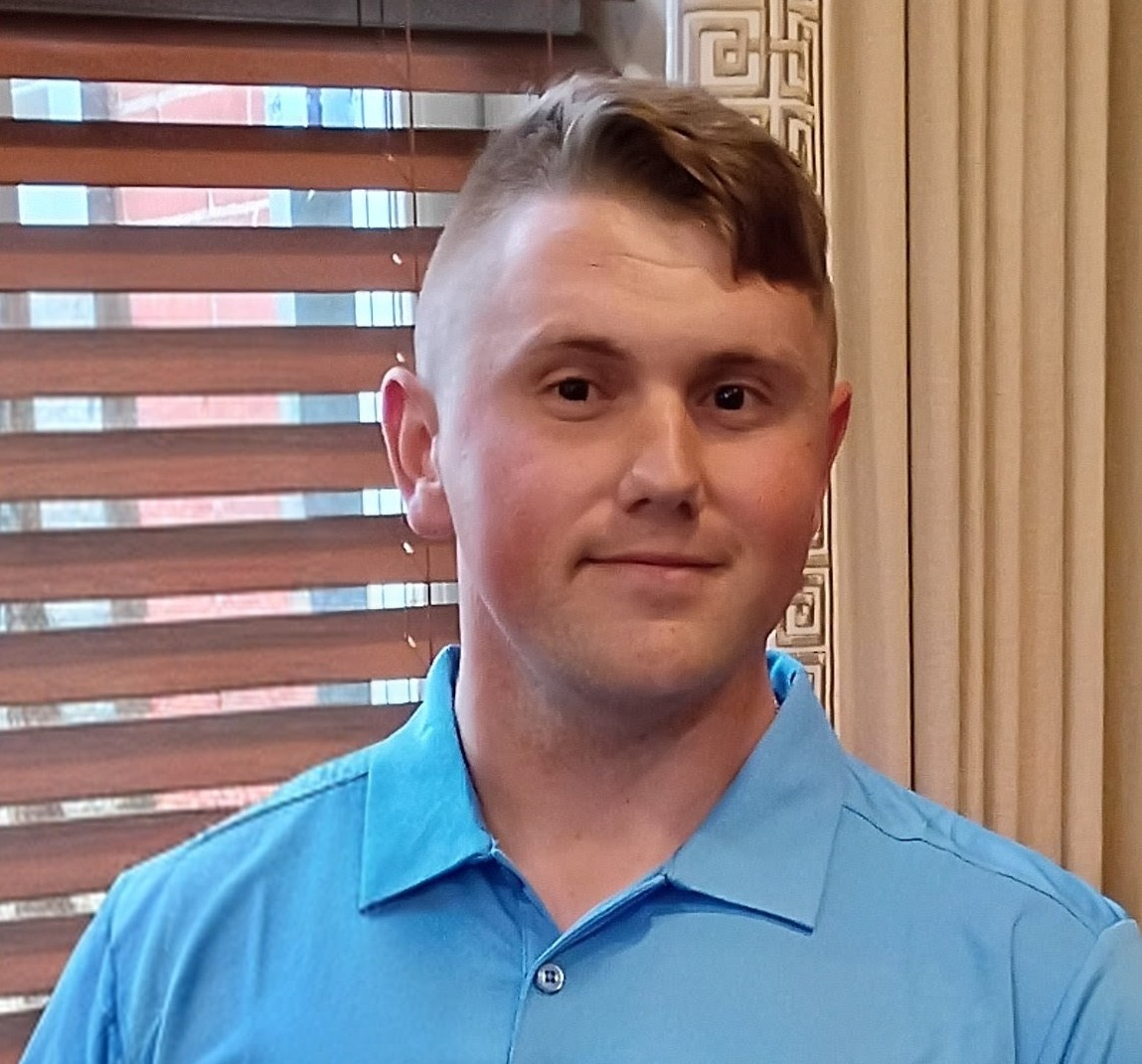 The next student veteran we are highlighting is Brenden Capps. Capps, a native of Dawsonville, GA, is earning a master’s in Sport Management and served in the United States Army for 5 years. During his service, he gained valuable skills that he employs as a graduate student. “The greatest assets I developed during my time on active duty [were] time management and backwards planning. Through utilizing these soft skills, I have been able to approach all my coursework and extracurricular activities by prioritizing and completing parts of my assignment based off the desired end state.”
Capps chose to further his education after his time in the military in order to advance his career and critical thinking skills. “I chose to pursue graduate education to challenge my scholastic ability and further develop my ability to comprehend and problem solve.” In the future, Capps wants to return to the Army to continue his service after completing his degree. His message to other veterans considering graduate school is to avoid letting uncertainty hold them back. He recommended that veterans “Embrace the challenge and find the fun in accomplishing a challenging task.”
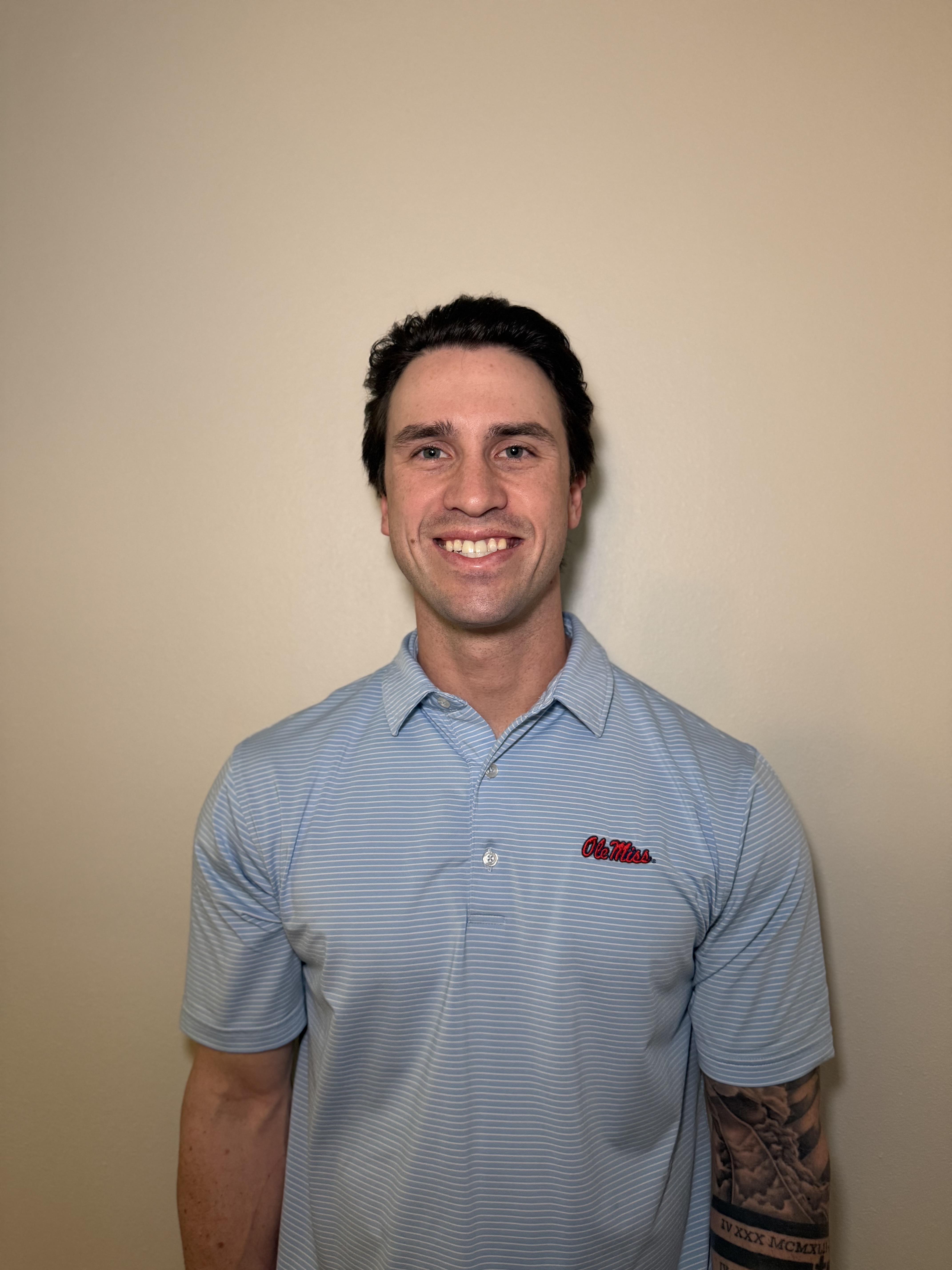 The next featured veteran is Cody Crawford, a native of Meridian, MS, who is earning his master’s in Business Administration. He served 7 years in the Mississippi Air National Guard, earning the rank of Technical Sergeant (E-6). His responsibilities included “coordinating and managing the movement of personnel and cargo, ensuring operations ran efficiently and on schedule.” He said his time in the service equipped him with skills, like “discipline and attention to detail,” that have carried over into his academic journey. “I approach coursework with structure, consistency, and a clear plan, just like I would any mission in the military. The military also taught me how to perform under pressure and adapt under pressure, which has helped me manage multiple assignments and complex problems without losing focus.”
Crawford decided to pursue graduate school after his service because he wanted to “diversify [his] career options and continue growing professionally.” After completing his degree, he plans to pursue a role with greater responsibility and growth opportunities. “I’m open to pivoting into marketing if it’s the right fit, especially something that blends structure with creativity. Long term, I want to keep progressing into leadership while doing work I actually enjoy.” His advice to other military personnel considering a graduate education is to weigh the long-term benefits. “My advice would be to think ahead and consider how further education can expand your options down the road. Even if you don’t need it today, it can make a big difference later.”
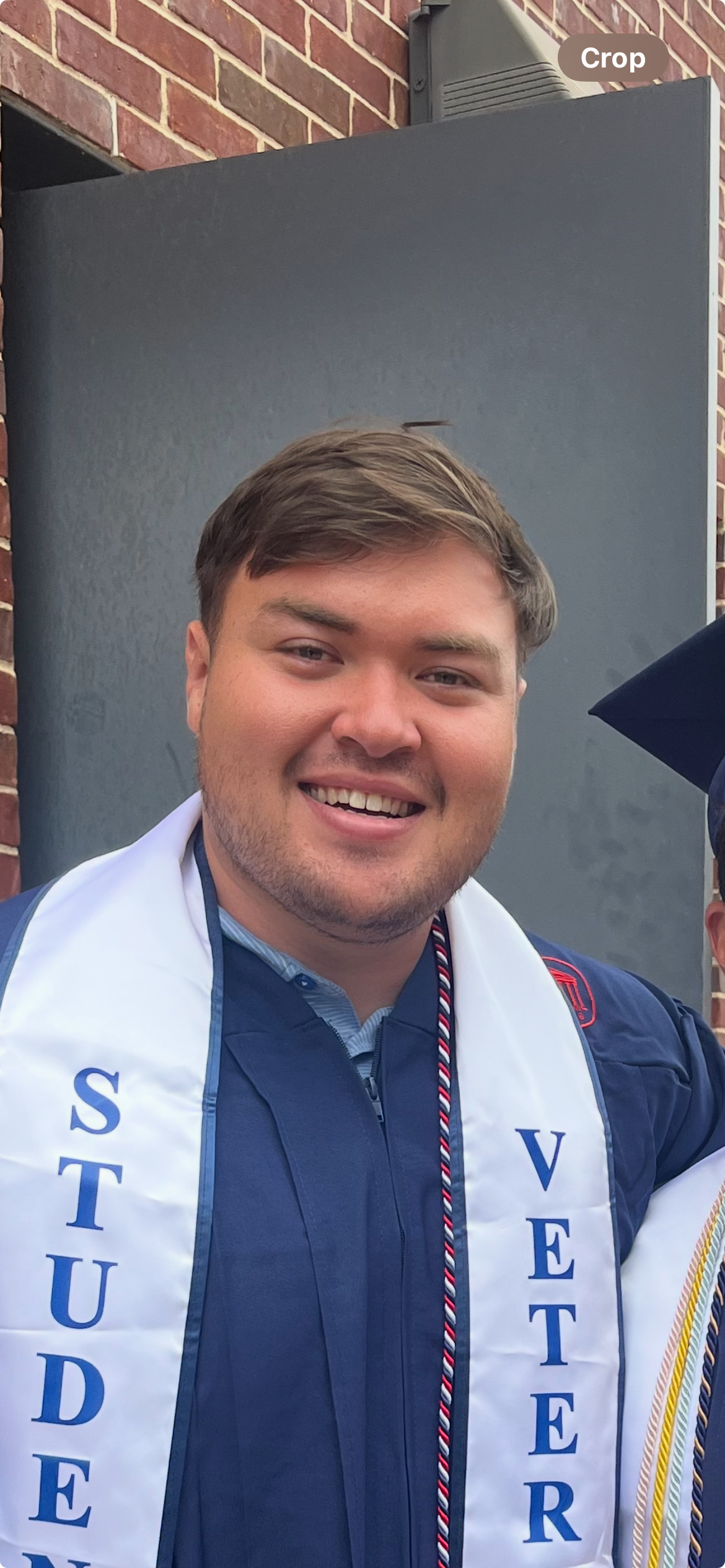 Our final featured student veteran is Erik Quinnett. Quinnett is currently completing his master’s in Criminal Justice and served in the United States Marine Corps as an Infantry Rifleman (MOS 0311) with 1st Battalion, 23rd Marine Regiment, part of 4th Marine Division. During his time as a Marine, he was also “activated in support of Operation Allies Welcome at Fort Pickett,” where he worked in an “interagency environment” helping with Afghan refugee operations. Quinnett thinks that his time in the service has played a key role in shaping his success in graduate school. “My experience operating in high-pressure and unpredictable environments has also helped me stay composed and focused in graduate school. Additionally, my exposure to real-world operations, especially during Operation Allies Welcome, has given me a practical perspective that I bring into the classroom. This not only helps me better understand the material but also allows me to contribute meaningful insights to discussions.”
Quinnett, originally from Davis, Illinois, credited his decision to attend graduate school to his real-world experience in the military. “While serving as an infantry Marine, I saw firsthand how complex real-world problems are…My time during Operation Allies Welcome, working alongside different organizations handling Afghan refugees, especially showed me how critical it is to understand not just tactics, but policy, systems, and human behavior. I recognized that if I want to be effective at a higher level, whether in federal law enforcement, intelligence, or public service, I need more than just operational experience. That realization pushed me to pursue graduate education in criminal justice.” After completing his degree, Quinnett aims to pursue a career in intelligence or federal law enforcement. “I am particularly interested in roles such as an FBI Special Agent or positions within agencies that focus on national security, counterterrorism, and complex investigations.” When asked what advice he has for other veterans considering furthering their education, he said, “A lot of us come in thinking school is completely different from the military, but the same fundamentals apply. Show up every day, stay disciplined, manage your time, and execute.”
The commitment of these students is reflected in the continued efforts of the University’s Veteran & Military Services team. The University of Mississippi was recently awarded “Large Public Military Friendly School Gold” and recognized as a “Top-10 Military Spouse Military Friendly School.” As the Director of Veteran & Military Services, Jeremee Alexander emphasizes, “The Veteran & Military Services team exists to put YOU first, ALWAYS! Whatever your need may be, please don’t hesitate to let us know how we can assist you.”
We thank all of our UM veteran and military-connected students for their service, with particular appreciation for our graduate students. We enjoy serving those who have served, or continue to serve, this country and this state, and we remain committed to assisting these special individuals as they complete their graduate journeys on our campus.